Taking on a couple of new projects for summer 2026–27
Get your data sorted. Automate the boring stuff. Build the clever stuff.
I'm Nick. I help schools, sporting teams and businesses turn the spreadsheets, forms and systems they've already got into things that save hours and actually get used. I've spent twelve years doing this inside AFL and NRL clubs. Now I do it for everyone else too.
Hours a week spent stitching one report together
hrs / week, by week
- 12 yrs
- AFL + NRL high performance
- PhD
- applied sport science
- 5 yrs
- data scientist in sport tech
- 1
- person you deal with
Three kinds of people, same headaches.
Different worlds, but the problems are weirdly similar: data everywhere, too much copy-and-paste, and a hunch there's a smarter way to do it.
Schools
sport programs, academies, adminFor the head of sport running the whole program off spreadsheets and email chains.
- Carnival results that sort themselves
- Forms, sheets and reports joined up
- Safe, practical AI for staff
Teams
clubs, academies, pathwaysFor the sport scientist spending half the week copying data between systems instead of using it.
- GPS, wellness and testing in one place
- Reports coaches actually read
- A single view of every athlete
Businesses
small and mid-sizedFor the owner who knows the answers are in there somewhere, but every report takes three days.
- Manual jobs automated
- One set of numbers everyone trusts
- AI tools that do something useful
Said one of these lately? We should have a chat.
“Every report takes three days, and by then it's out of date.”manual reporting
“Someone spends every Monday copying stuff between systems.”copy-and-paste jobs
“Two spreadsheets, two different numbers for the same thing.”no single source of truth
“We built a dashboard and nobody opens it.”built for data, not people
“Everyone's talking about AI. Where do we even start?”AI curiosity
“We can't justify a full-time data person.”capability gap
Four things, done properly.
No fluff, no 60-page reports. Stuff that works on Monday morning and keeps working after I've gone.
Get your data sorted
Pull it out of the five places it lives, clean it up and land it somewhere sensible. One set of numbers, written down, that everyone trusts.
Automate the boring stuff
The weekly report, the copy-paste between systems, the form someone retypes. If a person does it the same way every week, a computer probably should.
Reports people actually read
I learned this building for coaches who give you thirty seconds, tops. Answer first, detail after, and nothing that doesn't help someone decide something.
The clever stuff
AI assistants that know your own documents, video turned into data, predictions you can trust, custom apps. Real uses, not hype. I'll tell you straight if it's not worth it.
The before and after
Start small. Go bigger if it's worth it.
Fixed price, fixed scope, no hourly billing. Most people start with a Quick Win or a Health Check. It's the cheapest way for both of us to see if the bigger stuff is worth doing.
| Option | What you get | Time | Price |
|---|---|---|---|
| Quick Win | One annoying manual job, automated and handed over. Done. | 1–2 weeks | from $2,000 |
| Health Check | A proper look under the bonnet. What to fix first, ranked and costed. | 1–2 weeks | $3.5k–$6k |
| Build | One well-defined thing, built properly: pipeline, app, dashboard, AI tool or model. | 3–10 weeks | $8k–$45k |
| Ongoing | Your part-time data and automation person, without the hire. | 3-month min. | $2k–$9k/mo |
Problems, and what changed.
Told by approach and outcome. No data, no names.
A six-hour weekly report, automated to zero
Data landed every day from a vendor's system and someone stitched it together by hand before the next morning. I built a pipeline that pulls it in, checks it and sends the report on its own, and yells when something breaks.
An early-warning list that takes a minute to read
Daily monitoring data on a small group, where the signal is subtle and a false alarm costs you trust. I set up individual baselines with honest uncertainty, and boiled it down to one ranked list instead of a wall of charts.
Not ready for a project? Grab a toolkit.
Templates and workbooks from the same playbook I use on real projects. The first ones are on the way.
See what's comingI'm the one who does the work.
I'm Nick, based on the Gold Coast. I've spent twelve years in elite sport, including the Brisbane Lions and Melbourne Football Club, and I still work in pro sport today. Along the way I spent five years as a data scientist at VALD, the sport tech company.
Sport's a brilliant training ground for this. Everything has to run itself, because the season doesn't wait. Coaches ignore anything that takes longer than thirty seconds to get. And if a number's wrong in a selection meeting, everyone knows about it.
So I build things that are boring on purpose, I'm honest about what the data can and can't tell you, and I care way more about whether something gets used than whether it's clever. (Though clever is fun too.)
Turns out schools, clubs and businesses all have the same problems. Data in too many places, too much manual work, and a decision waiting on an answer that takes too long. That's what I fix.
Tools: PythonSQLRAWSGoogle WorkspaceMicrosoft 365Power AutomateApps ScriptReactLLMs & AIComputer visionPower BI
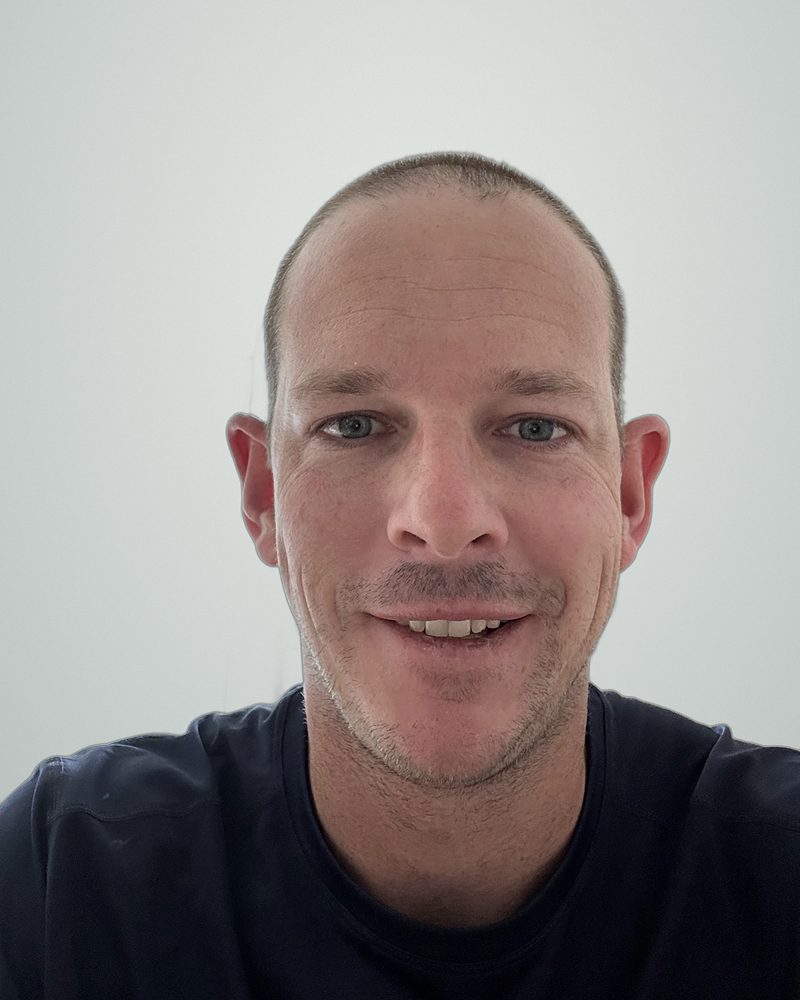
- Based
- Gold Coast, QLD · clients anywhere, in person around SEQ
- Day job
- Leading performance data and insights at a professional sporting club
- Before
- Head of Sport Science, Melbourne FC · Data Scientist, VALD · Sport Scientist, Brisbane Lions
- Study
- PhD in applied sport science · Grad Dip in data science · I also teach sports analytics at ACU
- Availability
- Evenings, weekends and agreed weekday blocks. I quote timelines around that, honestly.
- Conflicts
- I don't work with other NRL clubs or anyone competing with my employer. No client data crosses between projects, ever.
Stuff people ask first.
We're pretty small. Is this for us?
Probably, yeah. That's why the Quick Win exists. If there's one job someone does by hand every week, we can usually kill it for a couple of grand. If it's not worth it, I'll tell you on the first call.
You've got a full-time job. Will that slow things down?
It shapes timelines, not quality, and I'm upfront about it. I only take on a few projects at a time, I quote realistic dates, and I won't take a deadline I can't hit. If you need someone on site five days a week, I'll say so and point you elsewhere.
Do we need fancy systems first?
Nope. Most of my favourite work starts with Google Sheets, Microsoft Forms and an inbox. I'll use what you've already got and only suggest new tools if they pay for themselves.
Can you actually do the AI stuff, or is it hype?
Fair question, because there's plenty of both. I build practical things: assistants that answer from your own documents, tools that pull data out of forms and emails, video turned into numbers. If AI isn't the right answer, I'll say so. Sometimes a well-built spreadsheet wins.
Why fixed price instead of hourly?
Hourly pays me to be slow and turns every question into a negotiation. Fixed price means you know the cost upfront and I wear the risk of my own estimates. If the scope really changes, we agree it in writing.
What about student, athlete or customer privacy?
I've worked with athlete health data under the Privacy Act for years, so access, retention and de-identification are built in from day one. Happy to sign an NDA before we talk specifics, and I never reuse one client's data for another.
What's the first chat like?
Thirty minutes, free, no pitch deck. You tell me what's driving you mad, I ask a few questions about what you've got, and I tell you straight whether I can help.
Tell me what's driving you mad.
Thirty minutes, free, no obligation. If I'm not the right person I'll say so, and point you to someone who is.